Showing posts with label biology. Show all posts

Tuesday, 22 August 2017

Why your society should have an LBGT+ science event

I don't normally blog in direct response to twitter, but this thread from the wonderful Alex Bond invites a response from personal experience.
Please read this thread to learn what not to do when approached by LBGT+ scientists asking for greater representation in the societies they are members of. Specifically, I want to address this point with a personal story to illustrate how wrong headed an attitude this is. As I've mentioned elsewhere in this blog, I had only recently come out when I started graduate school. From the beginning, navigating outness in my career and navigating the world of science were intertwined. When I came to Johns Hopkins, the LBGT association at the school of medicine was more or less moribund (a good friend of mine who came along a few years later has since kickstarted it and then some). And my department, while I had an out colleague, did not really discuss these things. For my first year in graduate school, I was out to my fellow graduate students, and that was it.
So, when in the fall of my second year I went to my first meeting of my society, I associated being professional in science with being in the closet. But I was uncomfortable with this. Such feelings put a distance between you and fellow attendees, particularly at a conference where out of hours socialising is important (and enjoyable). Being professionally closeted involves eliding a lot of questions.
On the second night of the conference, I noticed a little sign on the noticeboard: "LBGT members dinner will be tomorrow evening at this location, at this time". And suddenly I knew I was not alone. I knew there were others like me in this place, in this society, and that they were welcome.
Ironically, I didn't go to the LBGT dinner that year. I wasn't ready for it. Wasn't ready to be identified as a gay scientist. But even without going, it mattered. And when I went back two years later, I definitely went, and have gone every year since. Each time, a new grad student, or indeed someone more senior, turns up slightly sheepishly, and they are welcome, and they are made a little more comfortable.
But even then, the LBGT dinner (which has been running for years) has always been held at a distance. It was the initiative of one or two people, who have organised it for over a decade, and maintain the mailing list. Getting it listed on the website as an official society event has been a struggle. And every so often you hear someone grumble when they notice the sign "why do they need one?". Which is really the answer to that question.
There is, among a certain generation of scientists, a belief that things were better when we didn't discuss these things. And they'll often say: "well everyone knew X was gay, he (it is invariably a he) just didn't make a fuss about it". If you believe this, I urge to ask X how they felt. You will probably hear a different story, of getting invited to considerably fewer social events, and never with a partner. Of being passed up for promotions and committees, of advisors suddenly becoming frosty and distant. Not talking about it was not about decorum, it was about protection, and being resigned to lesser treatment.
Every time an LBGT person enters a new space, they look for clues as to how out they can be. The older and more establishment a crowd (so most scientific conferences), the more they will assume they have to be reserved. This is difficult, isolating, and honestly just damned unpleasant. And all it takes to start to make it better is a sign on a noticeboard. Is that really so much?*

*No, it isn't and you should do more, but start with that.

Sunday, 20 December 2015

The walls are in our heads

We had a seminar the other day on optogenetics given by one of the junior faculty in the neuro side of our department. Those of us in the biomechanics side of things are increasingly interested in the sensorimotor processing necessary to regulate the complex musculoskeletal behaviors we observe. Like good physiologists, we want to be able to disrupt the systems to see how they respond. And the prospect of being able to alter sensory and motor signals reversibly and quickly is particularly intriguing. So we had a chat about it.
Talking with the neuro people is a stark reminder of disciplinary boundaries. Our basic questions overlap on the matter of animal behavior, yet diverge in where we focus our explanatory efforts. To caricature, we examine behavior and musculoskeletal systems, and treat the brain as a black box, and the neuroscientists examine behavior and the brain, and treat the musculoskeletal system as a black box. So things we take for granted, they often are unclear on, and vice versa.
As we were discussing the background of optogenetics, the names of Chlamydomonas and Volvox, the green algae from whose genome the photosensitive ion channel genes have been extracted, came up. Because of my dillettantish path through biology, I have fair amount of botany, and a lot of taxonomy, in my knapsack. And that same wandering path included a pretty extensive flirtation with both cellular physiology, and neuroscience as an undergrad.  As we discussed the various components of optogenetics, the light gated ion channels, the promoter sequences, the virus delivery vector, different questions popped into my head. Why did the algae have light gated voltage channels (I'm assuming some sort of phototactic behavior)? Where transposon sequences used to insert the genes into the neurone genomes, so that they would be replicated along with chromosomes, or were they left as free floating strands of DNA? Of course, in our group of mammalian biomechanists and neuroscientists, no one really knew the answers to those questions. And to be honest, they probably couldn't have pulled Volvox out of a eukaryote line up.
I often quip that huge amounts of knowledge about Mus musculus is held by people who don't give a damn about mice. Likewise, many of the people who know about Xenopus development probably know very little about frogs. Model organisms, translational focus and systems based thinking lead to extensive study of organisms that is oddly divorced from an understanding of the organism qua organism. Evolutionary biologists do this too. Systematists famously know little about the biological uses of the various structures they use to construct cladograms. In fact there was a time when such knowledge was considered harmful to establishing relationships, and systematists proudly touted their lack of knowledge about organism function. And molecular biologists have often been not much better regarding the organisms whose genomes they code.
And yet, here, with optogenetics, we have a technology that is born of in depth knowledge of the physiology of single celled algae, the reproductive chemistry of viruses, and the control of genetic expression at the cellular level in mammalian neurons. None of these things are trivial. All of them are products of long research programs within subfields of biology. (The discovery and understanding of transcription factors alone was a huge revolution in cellular genetics, and the histroy of our understanding of viruses and single celled algae is equally fascinating).
It is true that discplines are necessary to provide depth of understanding. It is also true, as Michael Hendricks recently pointed out, that interdisciplinary research assumes the existence of robust, vibrant, INTERESTING disciplines. But for this interdisciplinaryness to occur, there must be people with enough curiosity about what is going on in the neighboring silo to, well, see a possibility for coupling viral vector technologies with voltage gated channels from algae. And when the results of interdisciplinary research become ubiquitous within a field, there are potential risks in remaining ignorant about those aspects of your technique that come from a different scientific history and background.
Without a minimum of curiosity about what's going on in the silo next door, interdisciplinary breakthroughs are impossible. And without a minimum of curiosity about interdisciplinary breakthroughs, our understanding of things we do in our own fields is more black box that we might like.

Tuesday, 18 August 2015

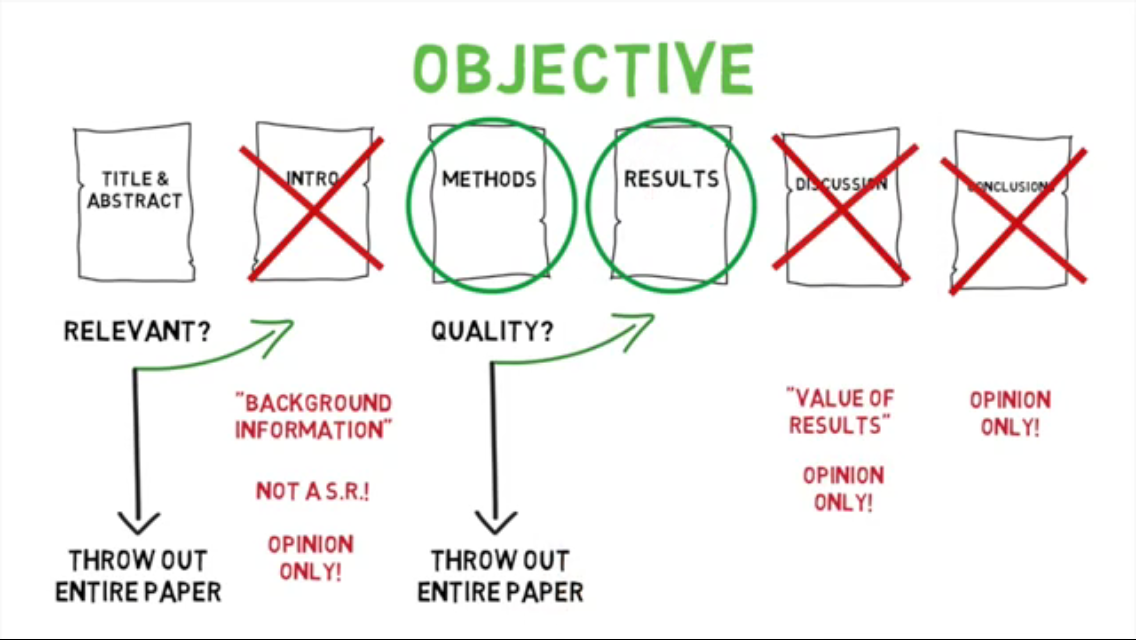
Why I read the introduction and discussion of papers

Over the past year, I've heard several times the sentiment that introductions and discussions of papers are not worth the .pdf memory they take up. Most recently, it took the form of the following cartoon passed around twitter.

Embedded image permalink
Cartoon by Anthony Crocco
But I've had this discussion in person too, with assistant professors in our department. And I just don't get it. To me, a paper without the introduction and the discussion is almost literally nonsensical.
The intro, discussion, and conclusion have value because I don't view them as opinion, but as argument. The introduction should set up WHY the problem is interesting to the field, and why the approach chosen is relevant. This isn't just set up. It tells me a number of useful things: whether the person knows what they are doing with regard to the broader intellectual climate they are working in for one, but also, their thoughts on why the problem is important may not be my own. Their thinking, as detailed in the introduction, may modify, interrogate, change my own. And their thoughts about why the work is worth doing will guide 1) how they did it, and 2) what they intended to get out of it (which is important, because that set up will color how they present BOTH the methods and the results).
What is written in a paper is never just a simple narrative of the work done and the results obtained. That is a stylistic conceit. So knowing the set up is essential for critically assessing the "objective" parts (which are not so objective).
But it is the dismissal of the discussion that makes me saddest. The implication that the discussion can be discarded means that what the authors think of their results is irrelevant. There may be fields (particle physics perhaps) where the results are entirely unambiguous. I have yet to encounter a biological problem in which that is the case. Moreover, the non linear hierarchical interaction of biological systems (from molecules to cells to organs to organisms to behavior to ecology to evolution) mean that from an integrated biology perspective, I want to know about potential implications of the resultsfor connected elements of the biological hierarchy of organization. Again, a well crafted discussion is an argument, and a source of ways forward, not the spewing of opinion.
But perhaps what makes me saddest about the sentiment expressed in that cartoon is the solipsistic vision of science it produces. A focus on methods and results discounts the intellectual work, the scholarship done by your peers. It views others' work solely in light of how it might relate to one's own, and assumes that modes of thought about scientific problems are already so fixed, that nothing new will ever be found under the sun. This is not my experience of science.
In my field (evolutionary biology), one of the most important events that ever occurred was the Modern Synthesis. Over the course of ten to fifteen years, a disparate group of biologists came together to generate the modern understanding of evolution by natural selection, rooted in population genetics. The modern synthesis involved no ground breaking discoveries, and happened before we even properly understood the molecular mechanisms of heredity. The modern synthesis was the result of years of discussion and argument, culminating in, not a series of papers detailing new methods and new techniques, but in a series of books detailing a new way of thinking about biology. Crucially, it involved biologists from other fields understanding each other's work, despite being unfamiliar with each other's methods. If Mayr, Simpson, Dobzhansky, Huxley, and Stebbins had only engaged with their colleagues work through the schema of that cartoon, the modern synthesis would have been impossible.


Wednesday, 5 August 2015

Growth

I am currently writing a manuscript. It's the second first author manuscript to come from my postdoctoral work (a little under two years in), and hopefully it will be sent out for review in the next couple of weeks. Currently, my PI and I are sending it back and forth, querying the writing, clarifying the main points, realising (for me at least) some pretty large gaps in my knowledge of the litterature. But, at no point since I wrote the first draft have either my PI or I thought anything other than "this is a good manuscript, we just need to make it even better".
This is in many ways the paper I came here to write. It's the paper that shows that I understand how to do biological kinematics, that is how to study the movement of biological structures as organisms use them. As I've mentioned elsewhere, my background (which now seems quite far off) is in ecomorphology as applied to the fossil record. I correlated variation in mammalian bone morphology with known variation in broad categorical behavioral and ecological variables. But these broad classifications don't tell you about function, and so about the behavioral phenotype on which selection is acting. So I took this postdoc in part to learn how to ask those questions.
And here I am, writing a paper that does just that, yet also so much more than I had anticipated. The study we did was an experimental manipulation to see how a nerve lesion affected the movement of the tongue and oro-pharynx in our animal model. The work replicates a relatively frequent iatrogenic injury in premature human infants, and so it is clinically relevant. But the direction we have taken with this paper is so much more than that. We're using the changes we observe to make inference about the neurological control of these oro pharyngeal structures. My head has, for the past few weeks, been full of discussion of central pattern generators, afferent and efferent pathways.
With this paper, I feel like I have grown immensely as a scientist. I have become the integrative biologist I've always wanted to be. I'm not doing it in this paper yet, but I feel ready to connect my paleontological work and knowledge of mammalian evolution with my understanding of experimental organismal physiology.
I have an idea of the direction I want to head in as a paleontologist, as a evolutionary biologist, as a mammalian physiologist. And it's so much more than I thought it would be when I started this project hoping to learn about kinematics.
I'm heading out onto the job market this year. And my research statement will be nothing like the one I wrote three years ago when I was finishing my PhD. I think it will be so much more interesting. And I hope others will too.

Tuesday, 19 May 2015

Why I'm excited about the opah

Last week, a new paper in Science (Wegner et al. 2015) announced that they had discovered whole body endothermy (that is, the ability to generate metabolic heat to keep the temperature of the internal organs above ambient temperature) in a pelagic bony fish. This fact is intrinsically cool, but as a mammalian paleontologist who is interested in the evolution of mammalian physiology, I was immediately intrigued and excited to know more.
Everyone knows that mammals and birds are "warm blooded", that is that they maintain a stable body temperature that is above that of the environment. Usually, they are described this way to distinguish them from lizards, snakes, crocodiles, amphibians and fish, collectively referred to as "cold blooded". But the details of heat physiology are much more complex than this simplistic dichotomy. At the most fundamental level, there are two different, and related axes of variation along which animals can be placed to describe their body temperature physiology.
One axis separates animals that maintain a constant body temperature (known as homeotherms) from animals that do not (known as poikilotherms,  a personal favorite word of mine). The other axis separates endotherms, that is animals that use the heat generated by internal metabolic processes (such as muscle contraction) to warm their internal organs, versus ectotherms, that use environmental sources (most often the sun, but sometimes other sources such as hot springs) to heat themselves.
Now here's what's really fascinating. If you imagine a plot with these two axis, you will find organisms all over it. You will find ectotherms that are excellent homeotherms, and endotherms that are highly poikilothermic (many tropical marsupials fall in this category). What is more, most animals can occupy, depending on the environment they're in and the specifics of their physiology, multiple positions in this space.
Of particular interest to this debate are the many ocean going, highly active predatory fish that have evolved varying degrees of facultative endothermy. These are animals (such as tuna and sharks), that use a specific arrangement of blood vessels called a counter current exchanger to trap the heat generate by muscle activity in their swimming muscles, thus allowing them to keep those muscles at the best temperature for efficient function in cold water. The limitation of this strategy, however, is that eventually the heart cools down, slowing down its pumping rate and starving the muscles of oxygen.
Which is where the opah comes in. It flips the script on what other facultative endotherms do, and places the counter current exchanger in the gills (I urge to go and look at the paper now; the pictures of those gill counter current exchangers are breathtaking). As the gills are in direct contact with water, they are a major site of heat loss. Mammals and birds have similar problem in the respiratory system, and have independently evolved highly vascularised nasal turbinates which also use vascular counter current exchange to trap heat inside the body cavity during exhalation. By placing the counter current exchangers in its gills, the opah (if physicists will forgive me this inaccurate metaphor) traps the cold outside its body (thus brilliantly illustrating Claude Bernard's definition of homeostasis). Furthermore, evidence suggests that the opah may use its pectoral fin muscles purely to generate heat, rather than to aid in locomotion, thus fulfilling the strictest definition of endothermy (that is, the use of metabolic energy purely for the generation of heat). Finally, the opah has developed significant insulation the form of fat, so as to prevent heat loss through the skin. The upshot of all this is that the opah's internal organs, including its heart, remain considerably warmer than the surrounding water.
So it seems pretty clear the opah is probably a homeothermic endotherm, and probably a pretty good one. It is always exciting to see a completely unexpected organism have converged on an evolutionary solution that we thought only another organism had achieved. But what really got me excited was the discussion of why the opah might have evolved this form of life. Namely, facultative endotherms like tuna must eventually leave cold deep waters (which are rich in fish) for sun-warmed surface waters when their hearts cool down. The opah, through its metabolically expensive endothermy, can remain in those waters permanently. Why is this exciting? Because the exploitation of a cold environment is exactly the scenario that has been advanced for the evolution of endothermy in mammals. Namely, it has been suggested that mammalian endothermy allowed triassic mammals to hunt at night, when other, ectothermic amniotes would be sluggish. In the opah, we have validation of the hypothesis that endothermy can evolve so that a thermally constrained niche can be exploited.
Biology training is becoming increasingly narrow, yet also increasingly broad. We study systems in limited model organisms, and then expand the mechanisms across groups without consideration of the ecological, and evolutionary specificities that have made these organisms what they are. But if our evolutionary scenarios make sense, then we should expect them to be repeated: the biological equivalent of the old maxim that the same causes produce the same effects. In the opah, we find, unexpectedly, confirmation of our hypotheses on the ecological situations that underpin the evolution of endothermy. In the study of the opah's evolution, we may gain insight into the variety of thermoregulatory solutions that accompany such trends. Comparative physiology, broadly studied and understood, is full of unsuspected explanatory power.

Friday, 5 December 2014

From the trenches of experimental biology

I remember a conversation I had in undergrad with my two best friends, both of whom where studying physics. We were discussing the relationship between scientific equations and the actual natural world over cups of tea (as you do when you're a bunch of over-achieving Cambridge students). As physicists, they were of the opinion that the equations had meaning, and that error was just that: the result of experimental imperfection. I was unconvinced: I could not perceive of any situation in which all biological observations would line up neatly with the predicted curve. There would always be error. Here lies a big division between the physical sciences and biology: we cannot get away from variation in biology. It it structured at the most fundamental level into the data we work with.
And sometimes, that variation is the dominant signal in your data. And that variation is both biologically relevant and analytically intractable. Which brings me, quite neatly, to my data. I'm currently working on a poster for the upcoming SICB meeting in West Palm Beach this January (conference location win, incidentally).  I'm looking at whether or not our experimental treatment is related to changes in how the tongue and jaw move in feeding. Our preliminary results (and these were reasonably robust preliminary results) showed a clear pattern. And then we added more sources of variation.
There was a point earlier this week where I feared the whole study would collapse, and that the interesting result was simply an artefact. As it turns out, elements of that pattern are consistent, but the variation between individuals and even between feeding bouts, is huge. Yet interestingly, within an individual and within a feeding bout patterns are highly consistent. The variation is non random. The variation is data.
The whole point of this project is to attempt to understand a system that is both highly integrated functionally and anatomically, and yet also highly variable. What's more, clinical prognosis for injury to the part of the system we're studying right now is also highly variable: symptoms of varying severity, duration and response to treatment efforts. We do work in a animal model precisely so that we can create reproducible, controlled injuries to the system. These are ceteris paribus (to use my PI's favorite expression) experiments. And, all things being equal, the system responds differently. This might lead some to look for some other systematic difference, and maybe there are some (stage of neural maturation, variation in anatomical patterns innervation, changes in spontaneous brain activity, or simply different strategies to adapt to the perturbation are all avenues we're looking at). And yet, at the base of it, I don't think there is any equation that we could make, even in an ideal world, that would result in our data lying exactly on the predicted line. Because variation in biology isn't noise, it's signal.