Monday, 11 January 2016

Reinvention

I came to David Bowie late in life. Growing up in the UK in the 90s', he'd already transitioned to Elder Statesmen of music stage. His classics were all pervasive, and as a cultural icon he was instantly recognisable, but like Dylan, Leonard Cohen, and the Beatles, an intimate knowledge of his work was not required as a teenager. It doesn't help that all his musical offerings were judged by the critics to be inferior to his heyday, dismissed as the restlessness of an artist growing irrelevant. Listening to Heathen today, I have to wonder how world changing his 70s work must have been for anyone to dismiss that album as sub par. From any other musician, it would have been exceptional.
It was through his greatest hits CD that I came to a deeper appreciation of Bowie, and a greater interest in his work and career. It turns out I have a liking for restlessly inventive musicians that has over the years lead me to dive through the discographies of the likes of Tori Amos and Bjork. But, of course, Bowie laid the ground work, the basic template for these artists. Both Amos and Bjork play with his interest in personas, syncretic music styles, and vocal acrobatics.
Bowie has become synonymous with his continuous reinvention of himself, which pre dates his famous retiring of Ziggy Stardust. Ziggy, after all, was his second or third persona. There's been a lot written about the personas trick, and it's mostly been viewed as device by which Bowie could continually reinvent his music, to anticipate changes and trends from glam rock to psychedelia to electro soul to straight up electro. But I think there's more to it than just that. At least since the Ziggy Stardust/Aladdin Sane change, Bowie's re-iterating transformations have been part of his appeal. The .gif of Helen Green's illustrations of David Bowie's changing faces that has been going around highlights our fascination with his reinventions.
Such free wheeling transformation is fascinating because, well, most of us don't get to deliberately reinvent ourselves all that much. There are a few moments in life when change is accepted (puberty, going to university), but by and large, we're expected to settle into some sort of stability, or at least of smooth continuity. Try coming into work with changed hair and a completely new style to test this out. And larger changes are more traumatic.
And yet, on the other hand, change, as Bowie himself noted in one of his most famous songs, is inevitable. Sometimes, life forces us into situations in which we must re-invent ourselves, construct new personas. Entering or leaving a long term relationship, becoming a parent, becoming an orphan. Becoming old.. Such events require some degree of reinvention, because some of the modes of existence  from our previous forms are no longer adequate. We can approach these changes more or less consciously, or more or less explicitly. Sometimes, we are unaware that we are transforming, until we realise that we are no longer who we once were. The risk here is that we change, but our image of ourself does not, and so one day we are strangers to ourselves.
As he was mulling over his affair with Albertine, Marcel Proust's narrator in the remembrance of things past realised how difficult it was for the version of him that was no longer in love with Albertine to understand the past him that was, or even to accurately remember what that person felt like. Memory is an active process, not a passive replay of the past, and so our current selves will tend to overwrite our past selves, declare them less authentic, less true versions of us. We are constantly engaged in a revisionist Whig history of ourselves.
The process of 'coming out' that gays such as myself go through in our modern western societies is an example of this process of active re-invention. In the standard narrative, the version of us before the coming out is incomplete, untrue, a cypher of the true self. And yet, this narrative never allows the actual pre-coming out version of the self (or several versions, I can count at least three for myself) to speak their truth, their experience.
I started writing a diary when I was 18 for precisely that reason: I felt my memories becoming less reliable as my adolescence ended and adulthood began. I wanted to leave a record of myself to myself. And sometimes, those old entries are like reading the notes of stranger. Things that are now trivial loom large, and dead ends of thought and growth long abandoned and forgotten are suddenly pressing and current.
In David Bowie's continuous re-inventions, we see a performance of our own lives, our own transformations. We have our equivalents of the man who fell to earth, Aladdin Sane, and even the Thin White Duke in our own lives. What Bowie allowed us to see was that we could be conscious of this change, and perhaps shape it at key junctures.
Our lives are being and becoming, until we become no more.
RIP David Bowie

Sunday, 20 December 2015

The walls are in our heads

We had a seminar the other day on optogenetics given by one of the junior faculty in the neuro side of our department. Those of us in the biomechanics side of things are increasingly interested in the sensorimotor processing necessary to regulate the complex musculoskeletal behaviors we observe. Like good physiologists, we want to be able to disrupt the systems to see how they respond. And the prospect of being able to alter sensory and motor signals reversibly and quickly is particularly intriguing. So we had a chat about it.
Talking with the neuro people is a stark reminder of disciplinary boundaries. Our basic questions overlap on the matter of animal behavior, yet diverge in where we focus our explanatory efforts. To caricature, we examine behavior and musculoskeletal systems, and treat the brain as a black box, and the neuroscientists examine behavior and the brain, and treat the musculoskeletal system as a black box. So things we take for granted, they often are unclear on, and vice versa.
As we were discussing the background of optogenetics, the names of Chlamydomonas and Volvox, the green algae from whose genome the photosensitive ion channel genes have been extracted, came up. Because of my dillettantish path through biology, I have fair amount of botany, and a lot of taxonomy, in my knapsack. And that same wandering path included a pretty extensive flirtation with both cellular physiology, and neuroscience as an undergrad.  As we discussed the various components of optogenetics, the light gated ion channels, the promoter sequences, the virus delivery vector, different questions popped into my head. Why did the algae have light gated voltage channels (I'm assuming some sort of phototactic behavior)? Where transposon sequences used to insert the genes into the neurone genomes, so that they would be replicated along with chromosomes, or were they left as free floating strands of DNA? Of course, in our group of mammalian biomechanists and neuroscientists, no one really knew the answers to those questions. And to be honest, they probably couldn't have pulled Volvox out of a eukaryote line up.
I often quip that huge amounts of knowledge about Mus musculus is held by people who don't give a damn about mice. Likewise, many of the people who know about Xenopus development probably know very little about frogs. Model organisms, translational focus and systems based thinking lead to extensive study of organisms that is oddly divorced from an understanding of the organism qua organism. Evolutionary biologists do this too. Systematists famously know little about the biological uses of the various structures they use to construct cladograms. In fact there was a time when such knowledge was considered harmful to establishing relationships, and systematists proudly touted their lack of knowledge about organism function. And molecular biologists have often been not much better regarding the organisms whose genomes they code.
And yet, here, with optogenetics, we have a technology that is born of in depth knowledge of the physiology of single celled algae, the reproductive chemistry of viruses, and the control of genetic expression at the cellular level in mammalian neurons. None of these things are trivial. All of them are products of long research programs within subfields of biology. (The discovery and understanding of transcription factors alone was a huge revolution in cellular genetics, and the histroy of our understanding of viruses and single celled algae is equally fascinating).
It is true that discplines are necessary to provide depth of understanding. It is also true, as Michael Hendricks recently pointed out, that interdisciplinary research assumes the existence of robust, vibrant, INTERESTING disciplines. But for this interdisciplinaryness to occur, there must be people with enough curiosity about what is going on in the neighboring silo to, well, see a possibility for coupling viral vector technologies with voltage gated channels from algae. And when the results of interdisciplinary research become ubiquitous within a field, there are potential risks in remaining ignorant about those aspects of your technique that come from a different scientific history and background.
Without a minimum of curiosity about what's going on in the silo next door, interdisciplinary breakthroughs are impossible. And without a minimum of curiosity about interdisciplinary breakthroughs, our understanding of things we do in our own fields is more black box that we might like.

Sunday, 15 November 2015

Techne

I was in New York yesterday evening to see Sylvie Guillem's farewell performance. Guillem is one of the great dancer of the past thirty years. Her career has been remarkable both for its brilliance, and for the determination she has shown in charting her own path as a dancer and performer. She has danced as a star in all the great ballets, but has devoted most of the past decade to contemporary ballet. Her work is breathtaking in its scope and originality.
Guillem has just turned fifty, and, with the same clarity of purpose that has marked all her career decisions, has decided to stop dancing. Yet she is not showing any decline in skill. Her performance yesterday was a masterpiece of virtuosity, her technique unparalleled, her famously athletic body still dazzling in the shapes it achieves, seemingly without effort.
As she writes herself in the program notes: "Why stop? Very simply, because I want to end while I am still happy doing what I do with pride and passion."
Performance relies on the body and the mind, and depends on the faculties of both. All performers live in anxiety of the failure of their tools: the body slows down, the muscles become less strong, the voice breaks. The mind fails. Dancers and opera singers are particularly aware of this, yet it affects all performers. A pianist known in her youth for extreme virtuosity may find as she ages that her playing must change. The fingers are less strong, the tendons tighter, and the spectacular brio of youth is gone. Yet the pianist is not necessarily done: a new maturity of playing, a new voice can emerge, as the performance changes to adapt to the new reality of the body. I remember hearing two recordings of the great violinist Heifetz playing the same concerto, once in his thirties, once on his final concert in his 80s. There was a noticeable difference in the playing. The youthful performance was brilliant and assured, yet the performance at 80, slower, perhaps a little more tremulous, had found a new depth of lyrical expression to the music. Perhaps, when virtuosity is insufficient, the performer must find new richness in the work.
Guillem's choices of pieces yesterday reflected this. They highlighted precision, athleticism, and shear physical expressiveness of her dancer' body. In the first piece, choreographed for her by Akram Khan, she crawled onto stage, and then reproduced her career before our eyes: her body growing expressing ever more technique. She explored the meaning of performance for her, and in doing so, entered a strange, uncanny space. Her human body became inhuman, the years of practice and the natural talent allowing to explore spaces that our bodies cannot enter. I watched as she lay on the floor in a posture that highlighted her over extended elbows and hyper flexible hips, and it was a strange thing. Virtuosity is other worldly. Yet the concern with the meaning of years of practice was a concern of maturity, of the artist wondering what it is they have done. Her other two pieces of the first half, where she danced with other dancers, seemed to me tinged with anxiety about the difficulties of collaboration. In one, Guillem appeared only for the briefest instant to disturb an exquisite, tense pas de deux between two male dancers, who kept coming into and out of phase with each other, ending sequences of steps in the same pose, but taking different paths to get there, and then sometimes seeming to attack each other. Was this a meditation on the frustrations of collaboration, and perhaps, the dangers of assuming one's centrality on the stage, and ignoring all that has gone on before you entered? In another piece, she performed a frantic duet with another female dancer while a dazzling light pattern redefined the shape of the stage constantly. Sometimes the dancers tracked the shifting lights, sometimes they didn't, yet always they moved as pair. Was this about succession and legacy?
In the final piece, entitled simply "bye", Guillem danced alone. This almost seemed a private dance (obviously it was not). And when she was done, she simply walked into a crowd, and vanished.
Guillem called the show "life in progress". That title acknowledges many things: that her life is not over because she has ceased dancing, and so by extension, that her life is not co extensive with her dancing (after all, she was once not a dancer, and existed as such). As scientists and academics, we too need to ask how long we wish to perform, and recognize that our life is not co-extensive with our work. And we too can think about how our performance changes as youthful virtuosity gives way to the techne gained through maturity.
Like performers, there is little reason to do academic science if we are not happy doing it with pride and passion. And like performers, deciding to end doing science does not mean deciding to end living.

Saturday, 17 October 2015

Notes of a prodigal paleontologist

I am at the Society of Vertebrate Paleontology meetings in Dallas, Texas. I haven't been to this meeting in two years, during which I've done very little paleontology, and in fact rather little evolutionary work. The last time I came, I was presenting the final part of my dissertation work. That presentation was on the results of four years of solid, focused work. This year, I presented the results of a side project collaboration which I am not leading (I'm the methods guy). The feeling was very different.
SVP was my main professional academic meeting throughout grad school. It was the first meeting I attended, the first meeting I presented at. I have good friends, colleagues and mentors here. In many ways, it still feels like home. My dissertation project was inspired largely by a single talk I saw at SVP Cleveland seven years ago. By the end of my time in graduate school, I almost felt I was beginning to get a certain reputation as a methods person. At the very least, the other paleontologists in that sub community knew of me.
But for the past two years, I've been doing something completely different, and attending different meetings, where I know far fewer people, and am known by almost none. I'm somewhat out of the loop on the paleo literature, having had to devote my reading efforts to understanding the literature of swallowing physiology and dysphagia. The abstract I put together for the meeting was on a completely different paleontological problem to what my dissertation was on (using the same methods). My co-author was the dinosaur footprints expert. I would be presenting to his peers. And I also wondered (giving my growing interest in comparative physiology and neural mechanism of muscular function) whether I would still be interested and excited by the meeting. And whether people here would still be interested and excited by me.
SVP is a surprisingly eclectic meeting, certainly I think more so than people not in the society might think. As paleontology has become more and more focused on understanding the biology of extinct animals over the past half century, the amount of comparative functional morphology at the meetings has increased. The advent of tree based methods for reconstructing evolutionary history has meant that many questions that were once the purview of fossil analysis can now be approached by looking only, or mostly, at living animals. Thirty years ago, these innovations resulted in virulent fights in the paleo community. Now, a quiet synthesis has occurred, and no one is surprised to see a talk discussing comparative gestation times in extant mammals follow the description of a new fossil. The first day, I struggled a little to find my feet. Much like when I return to France after a long break, the thoughts and ideas seemed to come from far away, and I wasn't entirely sure I could engage with anything. As the week wore on however, the language came back, as did the excitement. What's more, my new research was causing me to look for new things in the meeting. The paleoneurology (yes, it's a thing) and ontogeny talks were now on my radar. And I found (always a good sign), that many abstracts had ideas that paralleled some of my thinking, both on the questions from my dissertation, and on my new questions.
On the very first day, I saw a talk by one of the big guys in understanding early mammalian evolution. He was discussing the evolution of the unique mammalian nasal respiratory tract, and talking about the complex integration of smell, taste, chewing and respiration in mammals. Immediately I began tying in what he was saying with my thoughts on the neurophysiology of swallowing, and in particular how the mammalian oropharynx goes through a major neurological, behavioral and anatomical transition at infant weaning. After, I went to talk to him, and he seemed interested enough in my ideas, that were not coming from the study of fossils, but from my experimental work, that he wanted to know more. It was a reminder that I still belong here.
This morning, the last day of the conference, there was an entire symposium dedicated to the methodology I became an expert in as a paleontologist (an aspect of which had formed the basis of my own talk). I watched as several people, whose work I had always admired as a graduate student, got up and gave more talks. Talks I found compelling, novel and exciting. I now have new ideas I'd like to explore in my old data, and I'm reminded why I did this thing in the first place.
I came to this meeting unsure of what I would find, and more out of a desire not to abandon my identity as a paleontologist. I'm leaving reinvigorated, my ideas about the evolution of mammalian oropharyngeal function clarified, and new ideas of how I could link what I do to the fossil record emerging.
As I work on my transition to independence as a researcher, I'm glad to find that I'm still energised by the work and ideas of my earliest mentors, and that I in turn can energise them with what I'm doing as an experimental biologist. My path to this point makes more sense to me now, and I'm glad to know I still belong at this meeting, even as I make a place for myself at others.

Thursday, 1 October 2015

Coming to America

Why did I move to America? Because I'd always wanted to. Even when applying to undergrad, I did a cursory search of Harvard's website (this will immediately tell you something of what I thought about America, but no matter). I ruled it out as too expensive (and I resented the idea of having to take an extra exam), but I probably gave it more serious consideration than I did French university, and I'm a French citizen.
It is difficult, I think, for Americans, particularly the academically inclined, liberal kind, to truly understand the hypnotic fascination that America (before 9/11 in particular) could have on Europeans. Your cinema and television exported a culture of sophisticated glamour. Even the world of your cheesy soap operas (Baywatch, Sunset Beach, Dawson's creek, The OC) were so much more exciting than the dour drama of our British offerings. America seemed alive, and huge, and beautiful.
To put it this way: there was only ever one trip I wanted really to take, and that was to the statue of Liberty. By the time I had moved to America, I had already been here five times. The first ever trip I took to America in 1993 was the fulfillment of an already years long dream, and I didn't even get to go to Disneyworld. The statue of Liberty was enough.
And so, when I decided to go to grad school, I decided I would try to do so in America. I had no excellent reason beyond "why not fulfill two dreams in one?" I would become a paleontologist, and I would move to America. Both things I had wanted to do since I was less than ten.
But fulfilling childish dreams as a adult has costs. I suspected, applying for grad school in my early 20s, that things might end up more complicated than a five year jaunt across the Atlantic. One does not with impunity embark on a major life change in one's early twenties.
It is now 8 years since I first came to the US, and I have been here 7 of those last 8 years. I am now married to an American man. I have paid taxes in the US for more years than I have in England (even though I am ineligible to vote). I know the history, geography and culture of this country as well as I know that of France and England, and as well as many Americans. Yet I am not an American. I am a French and English man, here by choice and circumstance.
Many academics get used to international moves. Yet I get the impression that few choose those moves. I chose mine: I applied for PhDs in the US. And I knew what I was risking. Yet I did not know perhaps how much. This week I was applying for jobs back home. My husband and I have only the vaguest idea of how we would mesh his career goals with me moving back the UK. As much as part of me yearns to be closer to my friends and family, in some ways, that seems almost more complicated than staying here and flying home once a year or so. Yet what shocked me more was that I had no idea HOW to apply for a job in Britain. All my tacit knowledge in reading job apps, all my professional skills, all my wordsmithing were tailored to the American job market. Faced with a British job application, I was stumped.
I should not be surprised by this. I am the second generation in my family to drift between countries and cultures. My mother moved from France to England in 1973, and has lived as a French expat in London since then, awkwardly balanced between a culture she no longer entirely understands, and a culture she has never entirely understood. My siblings, I, and many of our friends are a syncretic mish mash, knowing the work practices of the English and the social practices of the French and only truly feeling comfortable when surrounded by other binationals who get the feeling of never quite fitting in. And I've added America to that mix. It is my home, yet I am not at home here.
This weekend, I spoke with my mother, as I do every week. We talked about my career goals, and about my husband and I. As I told about jobs in the UK I was applying for, to convince her I cared and was not a bad son, she asked me what my husband would do if I moved back to the UK. I answered that for his career, we would probably be apart a couple more years. Without hesitating, my mother told me that she would travel to see me wherever I was in the world, and that I should think about my husband and I as a couple when making career choices. She lifted a great weight from my shoulders, at the cost of not calling her youngest son home.
I have been true to myself in the geographical choices I have made (well, apart from Ohio. Ohio was not part of the plan). I have no regrets. But the life of the voluntary expat comes with costs, all the more complicated to weigh and measure in that they are in part self inflicted. I was not forced to come to America. What does that say about my attachment to my family? And if I refuse to consider myself American, then how do I deal with having my professional and family life here? Expatriation bears a toll, and as more academics become more international, more of us bear those secret bruises.

Tuesday, 8 September 2015

Return on investment, limited ressources and impossible hedges: the postdoc job search

I submitted my first job application for a faculty position last week. It's the first of around 30 opening I currently have listed. The application package (the American Standard: CV, cover letter, research statement, statement of teaching philosophy), took about a week or two to craft. I looked back over old letters I had written three years ago (for which I had already studied the internet intensely), judged them poor, rewrote them. I solicited, and got very good, feedback from my PI and two other professors in the department who know me. One is an associate professor, mid career, established in his field. The other is a pre-tenure, but very successful, assistant professor. The job itself was a neurophysiology position at a research school with a significant budget. And so all the materials will have to be recrafted for the more teaching focused schools, or the anatomy departments, or the more evolutionary and paleontological positions.
While I am working on these job packets, I am hard at work keeping the analysis and writing momentum we have developed in the group. I submitted my second first author paper from my postdoc for review last week, and next week I will take three days to finally revise and resubmit my third dissertation paper (which has been sitting on my hard drive for a year at this point). We have just finished a run of animal experiments, and there are at least two more first author papers (and several middle authors where I will be called upon for analysis) sketched out that could be ready by january.
My PI came and talked to me a couple of days ago. The R01 I'm on is in its final year, and we have not yet had a renewal. She informed me that my position is funded for certain until January 2017. If she gets refunded, the pressure is off. If not, I think that a few favours can be called in to complete that year, but no guarantees. To all intents and purposes, it is in my best interests to get a job this year, after two years in the postdoc.
Academic job applications are laborious, more so than private sector ones. More information is requested, the process is more drawn out, a greater research investment is expected at every stage of the process. And yet all that work is ancillary. Or, more specifically, it is icing. Grant, publications, research: those are the hard substrate you need for the crafting of the job documents to be even worth the effort. All these things take time, huge amounts of time. As a graduate student, or a postdoc, especially in a one grant lab like mine, time can suddenly become an exceptionally rare commodity. Like at the end of graduate school, I am on a timer if I don't want to face a serious gap in income. I have to maximize the ROI on the time I have. And knowing where to maximize that ROI is... non trivial. Obviously, more papers is better. But at this point, most papers I submit now will not be in press by the time applications close on most of the jobs I have lined up. Is a big list of in reviews worth it? How much is it worth relative to getting half a dozen more jobs applications out? After all, publication from the lab will help my PI's grant efforts, which also are of concern to me at this point.
I was in a similar bind at the end of grad school: I had no publications, my dissertation was unfinished, and I had no job lined up, a year away from cessation of funding and the end of my F1 visa. How to maximise my time? In the end, I wasted a few months on job applications: I got the very firm message that an ABD grad student with no pubs was not a hirable commodity. So I finished the dissertation, and headed back to the UK to live with my mother. I spent a year unemployed, applying for jobs and getting my first two papers out. It was not ideal, and owing to life circumstances not a scenario I can afford to repeat.
Which brings me to my next point in this rambling post. I have to prepare for the eventuality that I won't get a faculty position. With the current data on postdoc placement rates, all graduate students and postdocs need to hedge against not making it in academia. Yet what constitutes a good hedge? From my experience outside academia (which was before the recession), I know that field moves without experience are difficult. Again, you need to invest either capital (ie a nest egg to tide you over, difficult on a postdoc salary) or time to build useful contacts and experience. Time, which as I have mentioned, is a limited commodity when on a fixed term appointment.
I maintain that the challenges faced by people like me are not unique in kind to academia. Fixed term gigs, low starting salaries, competition for permanent positions, the open ended nature of projects that can expand to fill all available time, the constant need to re-invent yourself,  even the need to be highly mobile, can be found in so many other industries where young graduates now end up (law, medicine, consulting, finance, tech, game development). But the degree, and specific combinations of these factors, combined with an idiosyncratic job application process that is mostly useless for getting jobs outside of academia, do present unique challenges that can hamstring young people in academic science trying to keep their lives together. And the combination of lack of capital and lack of time means that efficiently hedging for the high likelihood of having to operate a career move is a unique challenge. On this, young academics are in need of mentoring.

Tuesday, 18 August 2015

Why I read the introduction and discussion of papers

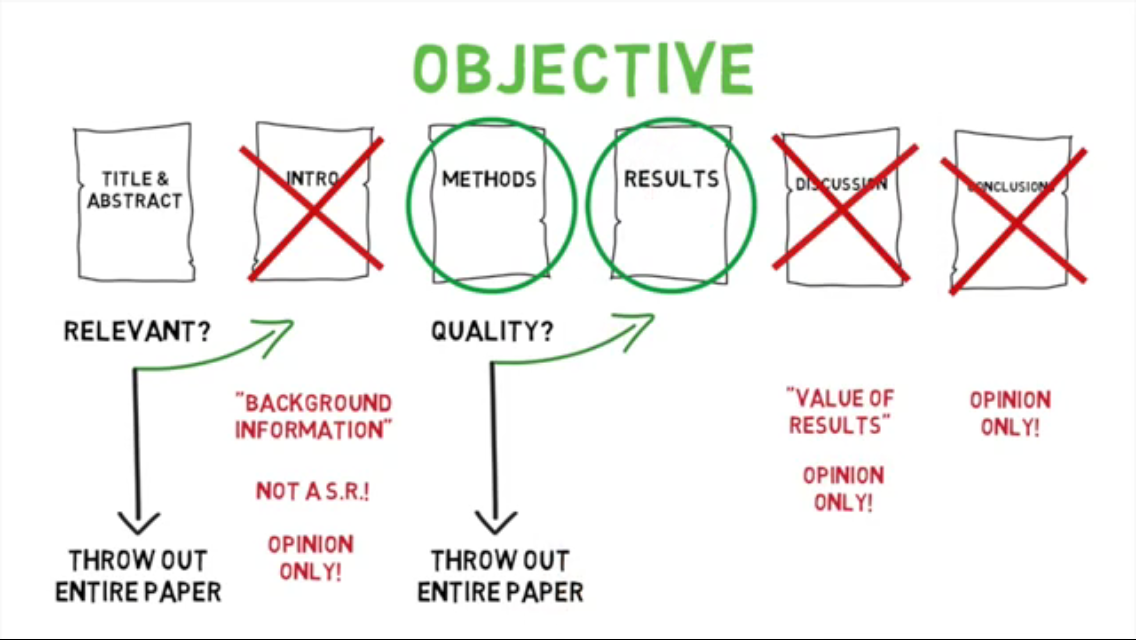
Over the past year, I've heard several times the sentiment that introductions and discussions of papers are not worth the .pdf memory they take up. Most recently, it took the form of the following cartoon passed around twitter.

Embedded image permalink
Cartoon by Anthony Crocco
But I've had this discussion in person too, with assistant professors in our department. And I just don't get it. To me, a paper without the introduction and the discussion is almost literally nonsensical.
The intro, discussion, and conclusion have value because I don't view them as opinion, but as argument. The introduction should set up WHY the problem is interesting to the field, and why the approach chosen is relevant. This isn't just set up. It tells me a number of useful things: whether the person knows what they are doing with regard to the broader intellectual climate they are working in for one, but also, their thoughts on why the problem is important may not be my own. Their thinking, as detailed in the introduction, may modify, interrogate, change my own. And their thoughts about why the work is worth doing will guide 1) how they did it, and 2) what they intended to get out of it (which is important, because that set up will color how they present BOTH the methods and the results).
What is written in a paper is never just a simple narrative of the work done and the results obtained. That is a stylistic conceit. So knowing the set up is essential for critically assessing the "objective" parts (which are not so objective).
But it is the dismissal of the discussion that makes me saddest. The implication that the discussion can be discarded means that what the authors think of their results is irrelevant. There may be fields (particle physics perhaps) where the results are entirely unambiguous. I have yet to encounter a biological problem in which that is the case. Moreover, the non linear hierarchical interaction of biological systems (from molecules to cells to organs to organisms to behavior to ecology to evolution) mean that from an integrated biology perspective, I want to know about potential implications of the resultsfor connected elements of the biological hierarchy of organization. Again, a well crafted discussion is an argument, and a source of ways forward, not the spewing of opinion.
But perhaps what makes me saddest about the sentiment expressed in that cartoon is the solipsistic vision of science it produces. A focus on methods and results discounts the intellectual work, the scholarship done by your peers. It views others' work solely in light of how it might relate to one's own, and assumes that modes of thought about scientific problems are already so fixed, that nothing new will ever be found under the sun. This is not my experience of science.
In my field (evolutionary biology), one of the most important events that ever occurred was the Modern Synthesis. Over the course of ten to fifteen years, a disparate group of biologists came together to generate the modern understanding of evolution by natural selection, rooted in population genetics. The modern synthesis involved no ground breaking discoveries, and happened before we even properly understood the molecular mechanisms of heredity. The modern synthesis was the result of years of discussion and argument, culminating in, not a series of papers detailing new methods and new techniques, but in a series of books detailing a new way of thinking about biology. Crucially, it involved biologists from other fields understanding each other's work, despite being unfamiliar with each other's methods. If Mayr, Simpson, Dobzhansky, Huxley, and Stebbins had only engaged with their colleagues work through the schema of that cartoon, the modern synthesis would have been impossible.